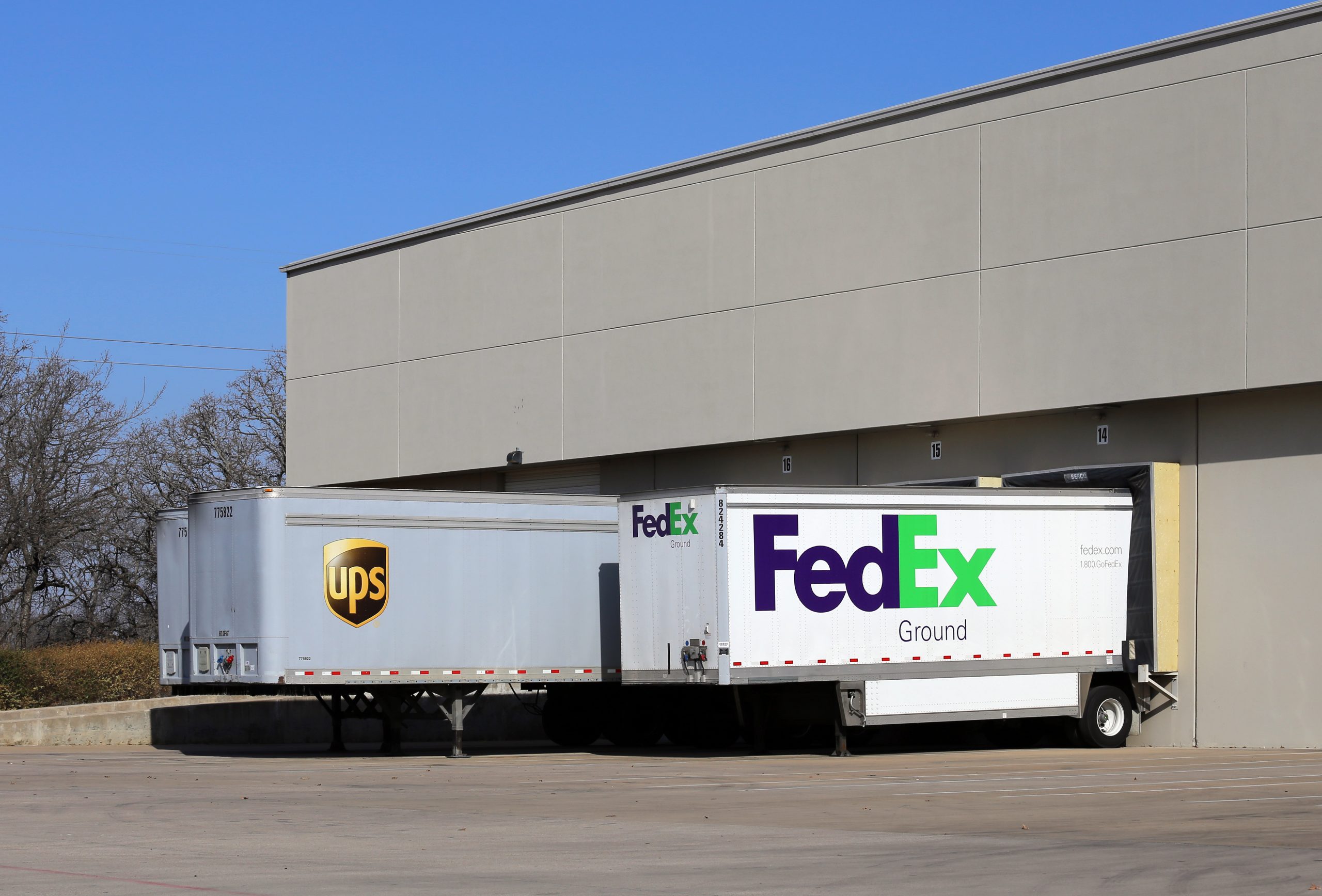
The 2026 GRI has taken the same conventional approach seen in previous years. FedEx announced a 5.9% increase, put into effect on January 5th. UPS made its changes earlier, implementing the same GRI.
Due to the conventional nature of this metric, customers and D2C brands are often lulled into a false sense of security. Many expect to apply the same “money-saving” measures used in the past, mistakenly believing that the shipping rate increase Canada is facing will lack nuance. However, within this expected and seemingly innocuous increase hide multiple cost-exacerbating factors that can create unexpected pressure on a brand’s profit margins this year.
This makes it necessary to deconstruct the 2026 GRI and understand what Canadian shippers should expect to change (or stay the same) this year.
What is a General Rate Increase (GRI)?
General Rate Increase, or GRI, is what carriers refer to as the annual adjustment of their base rates. The surcharge is included in the standard list of charges, which can be seen from the announcement FedEx, UPS, and major parcel companies make each year.
Operating costs such as labor, fuel, technology, and network maintenance are reflected by the GRI. External factors such as inflation also impact how GRI is decided.
Overall, GRI pumps up the published base shipping rates shippers pay before accessorial fees, discounts, and surcharges (especially peak season surcharges) are applied to the cost.
General Rate Increase is a uniform metric applied across all services. It does not represent a flat rate increase but a percentage, which has historically been 5.9%. This increase does not represent the surcharge related to fluctuating market conditions but is a standard annual price reset. As such, it is instrumental in shaping the shipping budget of shippers across Canadian soil.
Historical Trend of GRI
Annual increases have always been predictable when it comes to GRI. Shipping in Canada is shaped by this uniformity, especially since, over the past three years from 2024 to 2026, the GRI has remained at 5.9%.
While the increase is uniform, it has historically been higher than what inflation alone would warrant. For instance, even when inflation sits at 2% to 3%, the GRI has been higher, largely due to capital investment, wage increases, and network investment.
However, GRI is only one of the metrics that decide the price shippers have to pay. Zone-based pricing, weight bands, and costs related to service mix (Ground vs Air) are other factors shippers must consider.
This results in the effective surcharge impact of the GRI increasing or decreasing based on volume tiers. According to Intelligent Audit, lightweight parcels or parcels sent to residential areas tend to pay more than average. If the volume is high or the shipment is commercial, the GRI impact is typically lower than average.
What FedEx & UPS Announced for 2026
FedEx and UPS have published their rate increase for 2026 in the latest announcement.
FedEX
When it comes to FedEx, the 2026 rate increase is an average GRI of 5.9%. The increase is separate from base shipping rates before discounts and does not include additional surcharges or accessorial fees, which are adjusted separately.
Surcharge & Fee Adjustments: Also Effective January 5, 2026
In addition to the GRI, FedEx is updating numerous surcharges and fees that can materially affect shipper costs:
Here are some key examples of Fee Changes (Canada & international):
- Residential Delivery Surcharge: The residential delivery surcharge has jumped from $4.65 to $4.80 per shipment.
- Out-of-Delivery/Out-of-Pickup Area Surcharges: These have increased across dimensions and weight bands. However, they are tiered based on regions (tiered by region).
- Tier B has gone from $0.54 per lb per shipment to $0.56 per lb per shipment
- Tier C has surged from $4.08 per lb per shipment to $4.20 per lb per shipment
- Signature Fees: Direct and Adult Signature Required fees have increased per shipment.
- Direct Signature Required has gone from $6.20 per shipment to $6.50 per shipment
- Adult Signature Required has gone from $8.20 per shipment to $8.60 per shipment
- Declared Value Charges: Declared Value Charges have surged from $4.10 per $100 to $4.30 per $100
- Oversize Package Fees: Also increasing for both intra-Canada and international packages.
- International package service charges have increased from $109.50 per package to $114 per package
- Intra-Canada package service charges have increased from $159.50 per shipment to $169 per shipment
Customs Brokerage & Logistics Rates Increase
Separately from parcel rates, FedEx Logistics U.S. and Canada base customs brokerage rates will increase by about 4% effective January 5, 2026. This applies to customs brokerage services (not ancillary fees).
UPS
UPS’s 2026 rate increase was revealed on December 22nd, 2025, earlier than FedEx’s. The rate increase document showed that the 2026 GRI has been set at 5.9% for both domestic and international services.
Standard GRI rules apply here, which means the increase impacts only the daily rates that form the baseline before discounts, accessorial fees, and surcharges are applied.
The list provided by UPS is lengthy and can be downloaded from this link. Below is a sample of the 2026 UPS retail rates for specific weight bands and selected zones (102, 106, 108, 124).
UPS Next Day Air® Early
| Weight | Zone 102 | Zone 106 | Zone 108 | Zone 124 |
| Letter | $64.80 | $86.17 | $93.83 | $107.38 |
| 1 lb | $71.37 | $125.36 | $132.45 | $149.38 |
| 5 lbs | $80.54 | $157.55 | $173.13 | $196.28 |
| 10 lbs | $89.71 | $199.42 | $218.89 | $258.21 |
| 20 lbs | $114.72 | $285.93 | $311.40 | $357.93 |
| 30 lbs | $135.55 | $361.58 | $406.38 | $444.62 |
UPS Next Day Air®
| Weight | Zone 102 | Zone 106 | Zone 108 | Zone 124 |
| Letter | $34.80 | $56.17 | $63.83 | $77.38 |
| 1 lb | $41.37 | $95.36 | $102.45 | $119.38 |
| 5 lbs | $50.54 | $127.55 | $143.13 | $166.28 |
| 10 lbs | $59.71 | $169.42 | $188.89 | $228.21 |
UPS 2nd Day Air & Other Air-Scheduled Services
| Service | Example Rate |
| UPS 2nd Day Air® | ~$30.45–$44.10 (varies by zone & weight) |
| UPS Next Day Air Saver® | ~$18.45–$44.10 (varies by zone & weight) |
UPS Ground & Select Examples
Comprehensive details related to UPS Ground and 3 Day Select can be found in the linked document. To get a bird’s eye view of the trend, however, here is a sample table.
| Weight / Service | Zone | 2025 Published Rate (USD) | 2026 Published Rate (USD) | YoY Change |
| 1 lb (air) | Zone 102 | $72.42 | $71.37 | −$1.05 |
| 1 lb (air) | Zone 103 | $93.44 | $93.61 | +$0.17 |
| 1 lb (air) | Zone 104 | $111.58 | $110.16 | −$1.42 |
| 1 lb (air) | Zone 106 | $120.24 | $125.36 | +$5.12 |
| Letter (Air) | Zone 102 | $65.12 | $64.80 | −$0.32 |
| Letter (Air) | Zone 124 | $108.60 | $107.38 | −$1.22 |
How the GRI Impacts Canadian Shippers Specifically
Cross-Border Shipping Pushes Up Cost-to-Serve
GRI has a disproportionate impact on Canadian shippers, mainly because a large share of ecommerce volume moves into the U.S. These shipments are priced using U.S.-centric rate logic, which means GRIs end up resetting the baseline for both domestic and international lanes at the same time. As a result, a lack of understanding of cross border economics leaves many shippers in the dark about how much their shipping costs will actually increase.
Because of this, cost to serve analysis becomes critical when reviewing shipping costs. As the GRI is applied, unprofitability becomes more apparent across certain U.S.-bound SKUs, regions, or delivery promises. As one Reddit user noted, “Shipping from Ontario to the U.S. feels like paying domestic U.S. rates plus a penalty for being Canadian.” That penalty increases after each GRI.
Delivery Area Surcharges Demand Better Shipment Profiling
Canada’s vast and cold geography means surcharges related to delivery area and extended area impact affect a far higher percentage of shipments than in the U.S. Even when deliveries are routine and almost domestic, certain fees get triggered once carrier definitions are applied. As a result, when GRIs increase base rates, surcharges become larger, and during peak periods, the impact worsens.
Shipment profiling can help shippers in this case. Profiling refers to breaking down volume by postal code, service level, and accessorial triggers, which helps businesses identify which regions attract the most surcharges. A Reddit comment captured this frustration clearly: “Half our Canadian orders get hit with remote fees. It’s not remote to us, but UPS says it is.” GRIs continue to magnify this structural issue.
Contract Language Determines How Much of the GRI Is Absorbed
GRIs are nonnegotiable. However, their impact is usually visible only once invoices come through. Depending on the contract language used, shippers may end up paying more or less for the same services. Canadian shippers that rely on boilerplate carrier agreements, meaning prewritten shipping contracts with little customization, often realize late that GRIs flow across everything, from minimum charges and accessorial increases to fuel calculations, without any guardrails to keep cost increases under control.
To add safeguards, contracts should include surcharge caps, indexed increases, or exclusions that put a limit on carriers aggressively pushing costs higher after a GRI. Without these safeguards, even a slight increase in volume can raise overall expenditure. This is especially important in Canada’s parcel market, where competition is limited.
Limited Carrier Leverage Raises the Stakes
When delivering products across the nation, or even when engaging in cross border services, Canadian shippers have less carrier leverage compared to their U.S. counterparts. This leads to pricing pressure resetting quickly when both FedEx and UPS implement near identical GRIs at the same time. As a result, shippers are left with few alternatives for time definite delivery.
This environment forces Canadian e-commerce brands to move beyond simple renegotiation tactics. Fulfillment design strategies emerge as a stronger option to offset the lack of leverage. Optimizing cost to serve through better shipment profiling, clearer contract language, and disciplined price control forms a key part of these strategies.
What Carriers Don’t Mention About GRIs
GRIs tend to be the sole focus for many shippers when strategizing cost savings for the new year. However, rate increases do not provide the full picture because carriers rarely discuss their impact on minimum charges, dimensional rules, and accessorial logic. This is because all of these are reset to higher levels. As a result, shipping costs often rise beyond what base rates alone lead shippers to expect.
Carriers also do not explain how GRIs interact with contracts. Boilerplate terms, which are often rigid placeholders with little to no scope for customization, fail to account for additional surcharges, especially peak season surcharges. This reduces the impact of earned discounts and hurts shippers’ bottom lines.
Therefore, invoice auditing becomes necessary, as it reveals the true impact of new GRIs on shipping costs.
What to Do Before You Accept the 2026 GRI
Here are the key things shippers should do before accepting the 2026 GRI:
Audit the Invoices
Shippers should review billing details and perform invoice auditing on invoices from the past year to identify the true sources of cost. This includes assessing minimum charges, accessorial fees, billing errors, and dimensional adjustments.
With audited data, shippers gain leverage. When shippers have leverage, carriers are more likely to respond constructively. Identifying additional surcharges caused by billing errors or incorrect fees helps shippers strengthen their position when asking for concessions before the 2026 GRI takes full effect.
Focus on Shipment Profiling
Next, shippers should profile their shipments by assessing volume based on weight bands, zones, residential mix, service levels, and remote deliveries to understand which shipments are the most expensive.
This is a critical step, as GRIs affect shipments differently based on volume. High volume shipments may see a lower than average GRI, while residential shipments often experience a higher than average increase. In such cases, shippers that routinely handle short haul, volume shipments can ask for tailored pricing based on those patterns.
Renegotiate Contract Language
Contract language that relies on a standard boilerplate approach can push additional costs under the radar, leading shippers to pay more than expected. As a result, brands should ask for clearer contract language that includes details around surcharge caps and minimum charge protection.
Limits can also be placed on how GRIs apply accessorials through contract language, which can help offset costs even when base rates increase.
Get Earned Discounts Quickly
Earned discounts are reset when GRIs come into effect. Shippers should act quickly to secure these discounts before new base rates are applied. The most effective way to do this is through contracts that include clauses requiring existing incentives to be protected or adjusted.
Negotiate Using Timing and Optionality
There is typically a buffer period between the GRI announcement and when it takes effect. Shippers can use this time to exercise leverage.
One of the strongest forms of leverage is optionality, which involves signaling to the carrier that alternative options are being considered. When shipping volume is high enough, carriers tend to become more receptive to negotiation.
Conclusion
The 2026 GRI may look familiar on the surface, but its impact is anything but routine. Behind the uniform 5.9% figure lies a web of surcharge resets, contract mechanics, and structural shifts that quietly redefine shipping economics. For shippers who treat the GRI as a simple annual adjustment, the real cost only becomes visible once margins start tightening.
For Canadian e-commerce shipping, the 2026 GRI is less a pricing event and more a strategic inflection point. Those who invest in invoice auditing, shipment profiling, and stronger contract language can contain the damage. Those who do not risk letting a predictable increase quietly erode profitability throughout the year.
FAQ
What is the 2026 GRI from FedEx and UPS?
The 2026 GRI is a 5.9% average increase in published base shipping rates announced by both FedEx and UPS, effective late December 2025 and early January 2026.
Why is the actual rate increase often more than 5.9%?
Because GRIs reset base rates while surcharges, minimum charges, dimensional rules, and contract terms also increase, causing effective shipping costs to rise beyond the headline percentage of 5.9%.
What are common surcharges that rise with GRIs?
Common surcharges that rise with GRIs include residential delivery, delivery area or remote fees, additional handling, oversized package charges, declared value fees, and peak-related accessorial adjustments.
How do GRIs impact cross-border shipping to the US?
GRIs increase US-based rate structures, brokerage fees, and accessorial charges, raising cross-border shipping costs for Canadian shippers beyond domestic increases.

- Cheapest Way to Ship Within Canada – Complete Guide - May 27, 2026
- Why Shopify store owners in Canada overpay on shipping? - May 21, 2026
- How to Ship Jewellery in Canada: The DTC Brand Guide - May 15, 2026

