Canada’s 3PL market hit $19.84 billion in 2025, according to Mordor Intelligence. But most providers aren’t built for D2C.
Most of the market was built around moving pallets for big retail. Not shipping 300 skincare orders to customers in Mississauga who wanted a branded note inside the box.
The branded experience matters. Research shows 47% of customers enjoy premium unboxing. For a D2C brand, that moment is part of the product. Most 3PLs cannot deliver it.
The deeper issue is cultural. Most 3PLs treat smaller clients like a number. An LA-based fashion startup went viral in 2023 after posting that its business was on the brink. Too many sizes and SKUs, and its 3PL walked away. Fulfillment issues have killed more than one brand.
According to Newegg, most 3PLs actively avoid small merchants. They generate more support tickets relative to revenue. The economics push 3PLs toward high-volume clients. Everyone else waits.
But exceptions exist. Some 3PL companies in Canada are genuinely built for D2C. This guide takes an honest look at who they are, what they do well, and where they fall short.
What is a 3PL and do you actually need one?
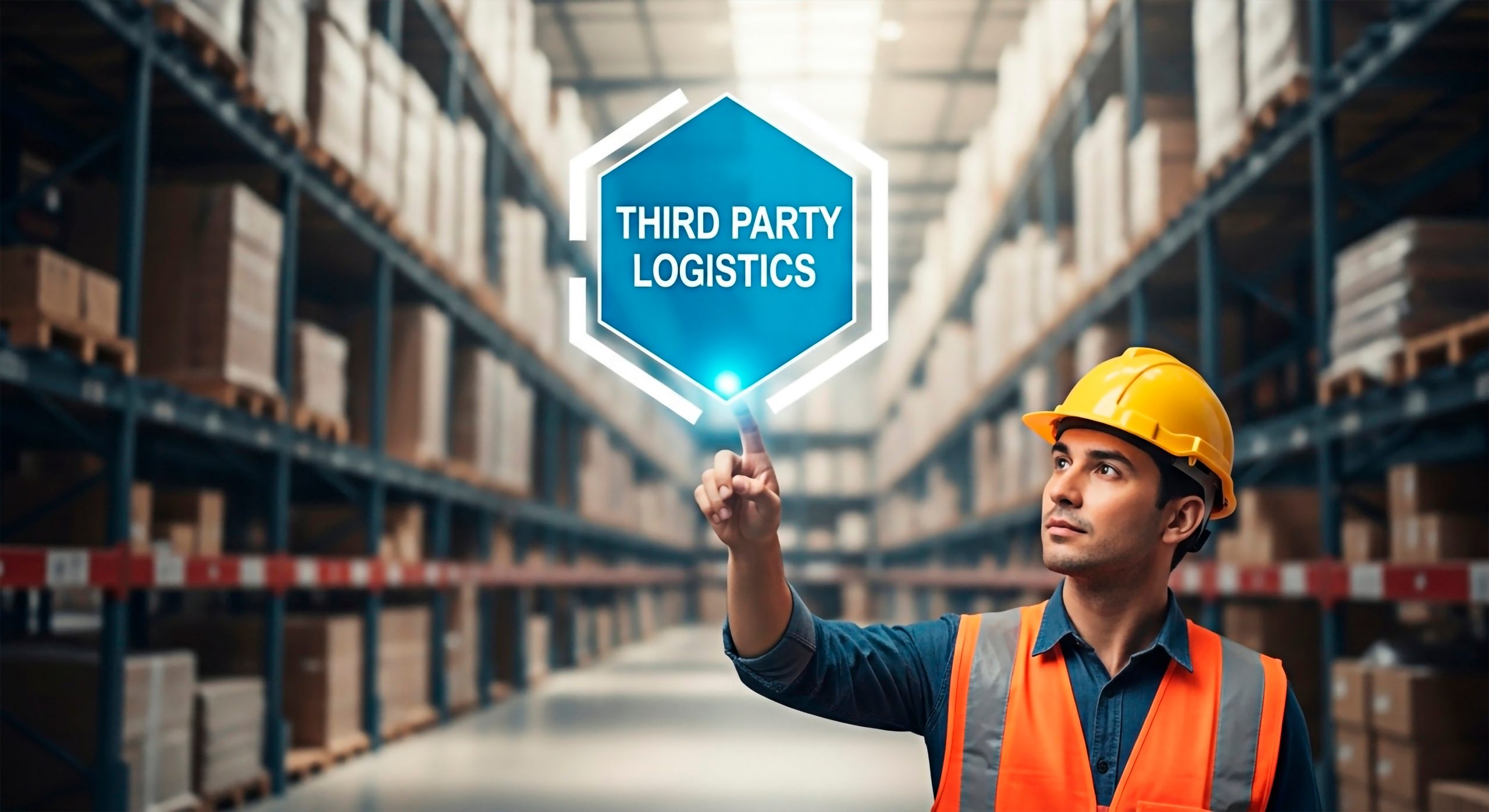
3PL is short for third-party logistics. It is the act of outsourcing ecommerce logistics, such as warehousing, shipping, fulfillment, picking, and packing. For brands, this is a way to focus on growth while assigning the menial but important logistics tasks to third parties.
Does your brand need it?
It depends on multiple factors, including your order volume, shipping time requirements, D2C shipping rates, and more.
If your order volume surges beyond what your brand is designed to handle, a 3PL can step in and absorb that pressure.
Same goes for inconsistent shipping times. A Fareye survey revealed that 85% of customers stop returning to an online store after a bad delivery experience. A 3PL can handle fast, reliable shipping at scale.
Limited storage is another reason to consider one. 3PLs let you tap into their warehouse infrastructure without the capital commitment of leasing your own space. They can also drive down shipping costs through route optimization and carrier volume discounts.
And for return management, a third party handles the process more efficiently than most brands can in-house.
The difference between a 3PL and a shipping carrier
A 3PL is not a shipping carrier. While a third-party logistics provider is an outsourced partner that manages your logistics needs that include shipping, a shipping carrier is an asset-based company that only offers one service: shipping.
While a shipping carrier’s main purpose is to optimize routes and maintain logistics during transportation, a 3PL is here to maintain end-to-end supply chain efficiency.
Shipping carriers are suitable for brands that have in-house warehousing and have spent more than enough money to consolidate their logistics process.
A 3PL is suitable for brands that don’t have any of that. These brands want their entire logistics process to be outsourced.
The difference between them is not about which one is better. It is about which one offers more services. Overall, shipping carriers handle the last task, shipping, and 3PLs handle entire logistics operations.
The Canadian 3PL market what you need to know before evaluating providers
Picking a 3PL in Canada often comes down to the cost. They cover everything from picking to packing to storage to returns that makes them the core decisive factor. Costs form the foundation layer on which you then judge whether a 3PL is worth your money.
Given below is the cost breakdown table highlighting the different stages of 3PL:
Cost breakdown table:
| Cost component | Typical range |
| Pick & pack (per order) | CAD $2.50 – $6.00 |
| Storage (per pallet/month) | CAD $13 – $35 |
| Shipping (small parcel, GTA to ON) | CAD $8 – $15 |
| Receiving (per inbound pallet) | CAD $10 – $30 |
| Returns processing (per unit) | CAD $3 – $8 |
| Hidden: address corrections | CAD $15 – $20 per parcel |
| Hidden: long-term storage penalty | : 1.5x – 3x standard pallet rate, triggered at 90–180 days |
The best 3PL companies in Canada what they’re actually good at
Below are some of the best 3PL companies in Canada, categorized based on the industries they serve. This is not a ranked list, but an honest look at the leading companies based on customer reviews and expert analysis.
Apparel & Fashion
DelGate Logistics
Founded in Canada, DelGate Logistics is an 11 year old company specializing in 3Pl warehousing and distribution. It has over 200,000 square feet of warehouse space across Vancouver, Toronto, Calgary, and Kelowna.
Strength of the platform is its national coverage across 4 major logistics markets. Its pick-and-pack services for brands are competitive for D2C. Client reviews of the platform are positive. TrustPilot shows 4 out of 5 stars based on 19 reviews.
“I was surprised at how organized the process was,” one reviewer said.
With Shopify Integrations available, and the addition of FBA prep, subscription box fulfillment, and returns handling, it is a suitable pick for most.
The platform has only recently gotten into apparel and fashion, and it shows. DelGate’s architecture is primarily for bulky orders: electrical appliances, furniture and such, so for apparel and fashion, it is still finding its ground.
Evolution Fulfillment
Evolution Fulfillment is one of Western Canada’s top-rated 3PLs. Founded in 2013 and based in Delta, BC, it operates 20 minutes from the US border.
Its approach is built around what it calls the Brand Fulfillment Model. This treats every fulfillment touchpoint as a brand moment, not a warehouse transaction. Same-day order processing, custom packaging, gift wrapping, and personalized notes are all standard.
That model translates directly into the apparel vertical. Evolution’s team carries genuine category knowledge. One apparel brand founder noted that staff understand not just logistics but the intricacies of the apparel industry itself. Another client called their communication and order accuracy second to none.
That accuracy is published at 99.5%. Across 33 verified Birdeye reviews, they average 4.5 stars.
The shortfalls are real though. Evolution requires a minimum of 2,500 outbound units or 500 pallet moves per month. Early-stage D2C brands will not qualify. It also operates from a single facility. For a country the size of Canada, that means longer transit times and higher shipping costs for brands serving Ontario, Quebec, and Atlantic customers.
Health, Beauty & Cosmetics
DCL Logistics
Founded in 1982, DCL Logistics is the most experienced provider on this list. Over four decades of operation means it has already earned the trust of high-growth brands in health, beauty, and wellness. Clients include GoPro and multiple major beauty names.
Its proprietary platform, eFactory, gives brands real-time visibility into inventory, orders, and returns across all channels. That infrastructure matters at scale.
On capability, DCL holds dangerous goods certification. That covers aerosols, nail polishes, hair dyes, and other regulated beauty products that most 3PLs will not touch. Its fulfillment centers include climate-controlled storage for expiry-sensitive products. Kitting, branded inserts, and unboxing configuration for influencer and subscription programmes are all part of its offering.
The savings case is tangible. DCL publishes average client savings of 33% on small parcel shipping and 21% on LTL. Its ReturnTrak system handles reverse logistics cleanly in a category where returns are a constant.
The problem for Canadian brands is straightforward. DCL has no Canadian warehouse. Every order ships cross-border. That means duty complexity, brokerage costs, and longer transit times baked into every fulfillment cycle. For an early-stage D2C brand, that overhead is difficult to justify.
Consumer Electronics & High-Value Tech
SCI Group
Founded in 1995, SCI Group is one of Canada’s oldest 3PLs. Headquartered in Toronto, it operates across 75+ locations and over 4 million square feet of warehouse space nationwide. In March 2024, Metro Supply Chain acquired it, backed by CDPQ.
SCI manages over $1 billion in inventory daily. Its facilities offer 100% traceability and visibility for tech products and spare parts, with certified technical services throughout. Those retailer relationships run deep.
SCI supports brands selling into Walmart, Costco, and other major Canadian retail chains, handling EDI compliance, kitting, and store-ready distribution. For brands that sell both D2C and through offline retail simultaneously, that dual capability is valuable. It is particularly well-suited for high-value logistics and consumer electronics.
However, in 2024, SCI Group was acquired by Metro Supply chain.
The scale tells its own story. Seventy-five locations and 3,000 employees mean SCI operates at a genuinely enterprise level. It is best suited for D2C brands with the order volume to justify that infrastructure. Smaller brands risk becoming a low-priority account.
Do you need a 3PL or a better shipping carrier?
The 3PL industry sells a complete package. Warehousing, pick and pack, shipping, returns. All under one roof. That full-service framing makes it easy for D2C brands to assume they need the whole thing.
Many do not.
If you are handling your own packing and your core problem is shipping costs or reliability, a dedicated D2C shipping carrier solves that without the contract complexity. ShippingChimp is one such option. It offers free pickups with no minimum order requirements. That alone makes it accessible at any stage of growth. No volume thresholds to hit. No long-term commitments to navigate.
For brands that are not yet ready to hand over their fulfillment operations entirely, or simply do not need to, a shipping partner like ShippingChimp can close the gap faster and cheaper than a full 3PL engagement.
The decision table below helps clarify which situation actually calls for which solution.
Decision table:
| Your situation | What you need |
| Packing in-house, shipping costs too high | Better shipping carrier |
| Running out of storage space | 3PL with warehousing |
| Spending 4+ hours/day on fulfillment | 3PL with pick and pack |
| Shipping 5000+ orders/month, need scale | 3PL evaluation |
| Need same-day GTA delivery | D2C last-mile carrier |
| Need free pickup with no minimums | ShippingChimp |
How to choose the right 3PL in Canada — a 5-step process
Step 1 : Know your numbers before calling anyone
Start with monthly order volume. That single number shapes everything a 3PL will quote you. From there, get clear on average parcel weight, dimensions, and SKU count. These determine storage costs, pick complexity, and dimensional weight charges on every shipment.
Then account for the less predictable variables. Peak season spikes are obvious. What is less obvious is that demand surges can emerge outside traditional windows. A viral moment, a press feature, a TikTok. Volume can double overnight. Your 3PL needs to handle that without breaking.
Without these numbers, you won’t have the leverage to assess 3PL. What you will be doing is listening to a sales pitch while not having any foundational information about your own work.
The right provider is not the cheapest one. It is the one whose pricing model fits your specific profile. A brand shipping 300 lightweight apparel orders a month needs a fundamentally different 3PL than one moving 3,000 heavy parcels. Know your numbers first. Then make the call.
Step 2 : Filter by geography first
Where your customers live is the most important factor in this decision. Not the 3PL’s reputation. Not its tech stack. Geography.
Canada uses zone-based shipping. Every zone a parcel crosses adds cost. A fulfillment centre in Vancouver shipping to a customer in Halifax can hit zone 8 pricing. That cost applies to every single order. It compounds fast and quietly destroys margins.
Shortlist providers with warehouse presence close to your customer concentration before evaluating anything else. For most Canadian D2C brands, GTA-based fulfillment makes the strongest geographic case. Ontario and Quebec together account for the majority of Canadian ecommerce demand. Fulfilling from the GTA means shorter zones, faster transit times, and lower per-order shipping costs for most of your customer base.
Geography first. Everything else second.
Step 3 : Request mock invoices, not generic quotes
A generic quote will not show you what you will actually pay. It will show you the best-case scenario, presented cleanly, with the uncomfortable line items left out.
You need the real picture. Only a mock invoice built on your actual order profile can deliver it. Give the 3PL your monthly volume, SKU count, average parcel weight, inbound shipment frequency, and return rate. Ask them to generate an invoice based on those numbers.
This does two things. It gives you an accurate cost projection. And it forces the 3PL to be transparent. No fees stay hidden inside a mock invoice. No surcharges go unmentioned. Address correction fees, long-term storage penalties, minimum volume charges, mixed-SKU receiving fees; all of it surfaces. Every line item you see at this stage is one less surprise on your first real invoice.
If a provider refuses to produce one, that tells you something too.
Step 4 : Test before you commit
Do not sign an annual contract based on a sales call. Run a proper pilot first. Pay to use the service at a small scale before committing at full scale. The goal is to feel how the operation actually runs, not how it is described.
During the pilot, measure pick accuracy, order turnaround time, packaging quality, and how damage or mispick issues get handled. Support responsiveness matters as much as any of these. How quickly does your account manager respond when something goes wrong? That answer tells you more than any SLA document.
A minimum 30-day pilot with real orders is the baseline. Anything shorter does not account for the variability of a normal fulfillment cycle. If a provider will not offer a pilot period at all, that is useful information. A confident operation does not refuse to be tested.
Step 5 : Call references from brands your size
Do not expect 3PLs to hand you fair references. They will not. What they will send are their happiest clients. Brands for whom the relationship has been seamless. Those references will tell you the 3PL can do no wrong.
Go and find your own. Skip the testimonials on their website. Start with Trustpilot. Then go to Reddit.
Reddit is where the unfiltered experiences live. Founders venting about a 3PL that held their inventory during a dispute. Operations managers describing hidden fees that appeared in month three. Brands warning others about support that disappeared after onboarding. It is not always fair. But it is honest in a way that curated testimonials never will be.
Search the provider’s name on r/fulfillment, r/ecommerce, and r/entrepreneur. Read what people say when they have nothing to gain from saying it. That is the reference check that actually matters.
Common mistakes when choosing a Canadian 3PL
The most common mistakes that happen when choosing Canadian 3PL come from a false feeling: it will be perfect. It never is. You have to be clear about what you want and must assess thoroughly.
Not planning for the inventory blackout during transition
Switching 3PLs feels like a clean solution. Until your inventory disappears into a logistics gap for two weeks.
This is the transition blackout. The period between your old 3PL releasing your stock and your new one receiving, processing, and activating it. Orders cannot ship. Customers do not know why. Your brand takes the hit.
It is not rare. It is standard. Most 3PL onboarding takes three to six weeks. The inventory blackout inside that window averages five to ten business days.
Plan for it before you sign anything. Build buffer stock. Schedule the transition outside your peak window. Communicate proactively with customers. The blackout will happen. What is optional is being blindsided by it.
Signing annual contracts before testing performance.
The 3PL sales process is designed to move you toward a contract. Annual terms, volume commitments, onboarding fees already paid. By the time the first invoice arrives with unexpected line items, you are locked in.
Do not sign annual terms before running a pilot. A contract signed on the strength of a sales call is a contract signed on faith. Faith is not a fulfillment strategy.
Performance problems rarely show up on day one. They show up in week six, when order volume spikes and the account manager goes quiet. They show up in month three, when the invoice no longer resembles the quote. Test first. Commit after.
Choosing on price alone
The cheapest quote is rarely the cheapest outcome.
A 3PL that wins on headline rate will often recover margin through the line items that never appeared in the original quote. Address correction fees. Long-term storage penalties. Surcharges for mixed-SKU pallets. Out-of-scope hourly rates for anything that was not explicitly defined upfront.
Price is one variable in a much larger equation. Accuracy rates, support responsiveness, tech integration quality, and contract flexibility all affect your real cost per order. A 3PL charging slightly more with cleaner ops will almost always cost less than a cheap provider generating constant errors, returns, and customer complaints.
Buy on value. Not on the number that looked best in a spreadsheet.
Ignoring tech stack compatibility
Your store runs on Shopify. Your 3PL runs on a warehouse management system from 2014 that technically integrates with Shopify but requires a manual export every morning.
That is not an integration. That is a workaround with a logo on it.
Tech stack compatibility is not a nice-to-have. It determines whether inventory updates in real time or 24 hours later. It determines whether an oversell happens on a Friday night when no one is watching. It determines how clean your returns data is and whether your account manager can actually see the problem when you call.
Before signing, ask exactly how the integration works. Request a live demo. Find out who owns the connection when it breaks. The answer will tell you whether you have a real tech partner or a warehouse with a Shopify badge on their website.
If you can’t get info about the tech stack directly, “Go out there and read what you can on selecting and working with a 3PL. Plenty has been written. Like anything: Google it.” one user on Reddit said.
Conclusion
Choosing a 3PL in Canada is not about finding the biggest name or the lowest quote. It is about finding the right fit for your volume, your category, and your customers.
The providers on this list each do something well. None of them do everything perfectly. That is the honest truth of the Canadian 3PL market in 2026.
Know your numbers. Filter by geography. Test before you commit.
Get started for free. Scale when you are ready.
Frequently asked questions about 3PL companies in Canada
What does a 3PL cost in Canada?
Canadian 3PL costs typically range from CAD $3 to $6 per order for pick and pack, $13 to $35 per pallet per month for storage, and $8 to $15 for small parcel shipping within Ontario. Hidden fees including address corrections, long-term storage penalties, and receiving charges can add 18 to 35% on top of quoted rates.
How many orders do I need to use a 3PL in Canada?
Most Canadian 3PLs become cost-effective at 500 or more orders per month. Some providers set formal minimums at 2,500 outbound units per month. Below that threshold, a D2C shipping carrier with no minimums is often the more practical and affordable option.
What is the difference between a 3PL and a shipping carrier?
A shipping carrier moves parcels from point A to point B. A 3PL stores your inventory, picks and packs your orders, and then hands them to a carrier for delivery. One handles transport. The other handles your entire fulfillment operation.
Can a 3PL handle both DTC and B2B fulfillment?
Yes. Most established Canadian 3PLs handle both. D2C fulfillment ships individual orders directly to consumers. B2B fulfillment ships bulk orders to retailers with EDI compliance and store-ready packaging. The capability varies by provider, so confirm both are supported before signing.

- How to Mail a Package in Canada: Step-by-Step - October 21, 2026
- How Long Does Express Shipping Take? A Carrier-by-Carrier Breakdown - October 12, 2026
- Best Shipping Companies in Montreal (2026 Guide + Top Picks) - October 12, 2026