There is a cross-border terror brewing, and it has nothing to do with violence but everything to do with shipping. This, “cross border shipping terror,” has caused fear among D2C brands ever since the US administration removed all the de minimis exemptions.
The announcement came on August 29, 2025, which said, “shipments to the U.S. valued under $800 USD are no longer duty- and tariff-free under the U.S. De Minimis exemption, unless the goods meet CUSMA (Canada-United States-Mexico Agreement) requirements.”
And in April 2026, the exemption removal went global.
“My clients are already freaking out about this and I’ve been pulling way too many late nights trying to help them figure out new sourcing strategies.” said ForsakenLeg_1113 on Subreddit, r/Accounting.
The removal of the de minimis exception is specifically bad for Canada, since its exports to the US account for $435.17 billion, or 76.4% of Canada’s total exports.
Costs rose as soon as the exemption safeguard was snatched right from under D2C brands. With de minimis, there were no costs, no duties, or tariffs. Now, there is an automated entry fee of $2.62, a manual entry fee of $7.85, and $11.78 for getting the article processed by the CBP officer.
But costs aren’t the only problems. Gone are the days when expedited processing was possible. Increased documentation means more processing time. A 1-day task will now take 3 to 7 additional business days. Operational disruption has already started, with couriers like DHL starting to suffer.
But adaptation is possible. This guide explores the new rules in depth and helps speed things up at the customs office to help you stay on time and not lose customers.
How long does customs clearance take from Canada to the US?
Below is a chart showing the time required for customs clearance from Canada to the US.
Clearance time table:
| Shipping method | Typical clearance time | Best case | Worst case |
| Express courier (FedEx/UPS/DHL) | 1–2 business days | Same day | 5+ days if flagged |
| Canada Post → USPS (postal) | 3–10 business days | 1–2 days | 2+ weeks |
| ShippingChimp | 2–3 business days | 1 day | 3+ days |
| Land border / ground freight | Few hours – 2 days | Same day | 3–5 days |
What changed in 2026: the end of de minimis and what it means for your clearance time
What was the de minimis rule, and why did it matter?
The de minimis rule ensured that low-value goods (goods priced below $800) could be imported directly to consumers without paying tariffs. There were no custom checks, which meant no hassle for the courier, and no burden for US customs as it filtered low-value, low-risk shipments.
Delivery was quick and cheap as platforms like Temu, Shein, and other global e-commerce giants relied on it. For smaller D2C brands, it was a godsend as no tariff meant higher margins.
What changed on August 29, 2025
D2C ecommerce grew rapidly worldwide until late 2025. As small packages increased in volume, governments started to wonder, “Are we compromising with regulatory oversight just to maintain economic efficiency. ” That question pushes regulators to scrutinize the current ecosystem.
But the rationale for scrutiny wasn’t completely economic. In the official executive order, President Trump announced the end of exemptions by using the following words as the main reason:
No more $800 exemption. Customs duty became applicable to everyone. Costs went high. Small brands started to suffer.
“It affects the small business that employs me.” a user named TerriblePair5239 posted on Subreddit r/AskEconomics/ in a post that inquired about the degree of impact small businesses will face.
But the rules that held the Canadian export market together for so long aren’t all lost. There is one exemption: CUSMA.
As long as the product shipped came under CUSMA, it will get preferential treatment. While brands do have a reason to smile, even CUSMA introduces a whole new level of complexity that affects clearance times.
What does CUSMA mean for your shipments?
CUSMA is short for the Canada-United States-Mexico Agreement. This free trade agreement is a replacement for the North American Trade Agreement, designed to safeguard products from new tariffs.
For a product to be CUSMA-compliant, it must have a Certificate of Origin. It has one core eligibility criterion:
Goods should be grown, fished, harvested, or manufactured within the CUSMA regions.
Getting it requires filing an online application. Documentation includes tax compliance, receipts, supplier declarations, and brands must also have the documents related to the supply chain.
Officials have lauded this move, highlighting a list of benefits that await users. They revealed that CUSMA maintains duty-free trade for small businesses. In the CUSMA SME Chapter, officials mentioned that indigenous people, women, youth, and minorities will be promoted through this new agreement.
There are also promises of specific education programs for SMEs. And a trilateral SME dialogue is established to help SMES increase their margins.
The ground realities are different and could be found on Reddit. Compliance costs have gone up for one.
Rules of origin are not easy to understand.
“CUSMA compliance is far more difficult than people realize,” a user named joe4942 said, “if you are a reseller or import products from outside of North America, it’s almost impossible to qualify.”
It shows the dissonance between the promise of ease and ground reality.
The postal channel
Removal of the de minimis exemption has created a storm, sweeping the revenue of postal shipments to the US by 81%, according to Flavorcloud.
According to Trade Finance Global, 30 countries will stop postal services to the US.
With de minimis gone, postal shipments into the US will now face a structured duty assessment that applies to every package.
For the likes of Canada Post, La Poste, and Royal Mail, there are two options.
One is the Ad valorem method, in which a % duty for the country of origin is multiplied by the package’s original value. The second method is the specific duty based on tariff rate category. But it was only valid for up to 6 months after the announcement.
USPS is already suffering. The postal carrier is going through a severe “Cash crisis” already, with over $100 billion worth of cumulative losses since 2007.
Exemption removal further exacerbates the losses.
One professional on LinkedIn commented that many small packages in the US are delivered through USPS. Removal of the de minimis exemption drops USPS’s chances of survival.
Customs clearance timeline by shipping method: Detailed breakdown
Express couriers
For express couriers like UPS, DHL, and FedEx, customs clearance can take hours because shipments are pre-cleared during transit.
For standard commercial, clearance can take up to 1 to 3 days. If there are delays or inspections due to improper documentation, suspicious products, or additional permit requirements, clearance can take 3 to 7 days.
Overall, users should expect same-day to 1-day shipping if the shipment is clean (documents + duties sorted). For a typical business shipment, expect 1 to 3 business days.
With issues and delays, clearance can take 3 to 10+ days.
Canada Post → USPS postal
The Canada Post to USPS portal is structurally slower because there is no brokerage layer (the layer that handles clearance measures) present.
It relies highly on manual inspection and batching, and payment of duties often requires recipient interaction.
Users should expect a 2 to 7 business-day clearance window as the norm if every document and product is clean. During peak periods, due to backlogs, or during inspections, the time can extend to 1 to 3+ weeks.
Since slow and thorough is part of its structure, same-day clearance is nigh impossible.
ShippingChimp
ShippingChimp offers a middle ground for D2C volume.
For one, it moves D2C products across the border in bulk before injecting them into USPS or a courier network inside the US.
For small e-commerce sellers and frequent shippers, it saves the most costs. Rates are lower than those of direct couriers. Duty treatment depends on which network they use for final delivery.
Why your parcel is stuck in customs the 7 most common causes
From missing HS codes to peak-season backlogs, here are the seven most common reasons why parcels often get stuck at customs.
1. Missing or wrong HS code
“Shipper gave the wrong HS code. Parcel stuck at US customs,” user named EmetToMet said on Reddit.
HS code, or the harmonized system code, classifies traded products. If the code is missing, the product gets detained.
If not fixed quickly, the financial penalties could range from 25 to 40% of the goods’ value for gross negligence. It also triggers increased inspections, which automatically contribute to delays.
2. No Declaration ID
If the declaration forms are filled out incorrectly, such as a CN22, the product may get stuck in customs.
Issues like missing declaration ID can be resolved quickly if sellers respond promptly when carriers contact them for the correct details.
Without the right declaration ID, duty calculations are inaccurate. Security inspection frequency ramps up. And a document mismatch can cause commercial invoices to become inconsistent.
In extreme cases, the seller could be jailed, or the item could be banned.
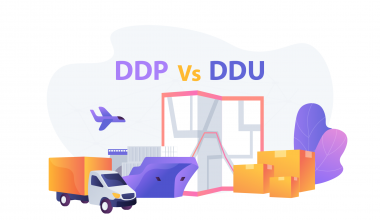
3. DDU instead of DDP
DDU is delivery duty unpaid, and DDP is delivery duty paid. If the product is marked as DDU, the recipient contracts the courier to pay the duty fee to release it.
If not, the label remains, and the product gets stuck. If the DDU-to-DDP transformation takes too long, the package may even be destroyed.
Evidence of that is found on one Reddit post on the r/Alibaba Subreddit that said, “If customs clearance is not completed promptly, the package will be destroyed.”
4. Inaccurate declared value
Inaccurate value is when the stated value of imported goods does not match the actual transaction value. It creates a dissonance between the price paid vs payable.
It is a high-risk compliance error, with direct and indirect penalties. Direct ones include fines: 20 to 40% of the merchandise value. If there is gross negligence, a 100% penalty is levied.
Indirect penalties arise when customs decide to reevaluate the product, valuing it as a product of a similar nature.
Then there are delays of 3 to 7 business days. In extreme cases, goods can be seized, and sellers may even face criminal charges for tax evasion.
An inaccurate declared value is a common occurrence, as some shippers are of no help.
One user on r/LinusTechtips complained that they did not receive support for customs clearance from the company. The user even ended up paying an additional 26.16 EUR in fines.
“They even basically called me a liar saying I didn’t have to pay an extra fine even though I provided them with the invoice that shows it.” the user said.
5. Missing Certificate of Origin for CUSMA claims
Those who want to gain access to preferential treatment must throw away margins if a Certificate of Origin is missing.
If the Certificate of Origin is missing, customs cannot verify preferential tariff treatment. It triggers mandatory reviews, duty payments, and, in some cases, cargo is detailed permanently.
6. Prohibited or restricted product categories: Foods, supplements, cosmetics, electronics with batteries
Prohibited goods, such as fresh, dried, or canned meats (beef, pork, poultry), sausages, dairy products (milk, paneer), and many fruits/vegetables (e.g., mangoes, citrus), are often detained at customs to prevent the entry of pests and diseases.
Supplements containing prohibited ingredients, lacking proper labeling, or violating FDA requirements for safety/ingredients also face detention.
The same is true for electronics with batteries. Lithium-ion batteries exceeding 160Wh, or ones that are not properly installed/packed, are prohibited.
Other prohibited goods include narcotics, counterfeit goods, hazardous materials, and items that violate IP rights.
7. Peak season volume backlog
During peak seasons, delays in customs clearance range from several days to several weeks.
They are most common during Christmas and Black Friday. As customs carriers are overwhelmed, bottlenecks happen (the number of shipments often doesn’t match the staff required to manage them).
Even compliant shipments can get stuck during this period.
Experience by a user named JackiePoon7 paints a grim picture of what happens during peak seasons. “Louisville has close to 200,000 import packages in its warehouse. Other import hubs are also completely overwhelmed. They are making use of additional staffing, but it’s still a massive bottleneck.” the user posted on Reddit.
Overall, the common factors contributing to customs clearance delays are both internal and external. While you may not have control over the external, you can manage the internal factors to speed up Canada-US customs.
How to speed up Canada to US customs clearance in 2026?
Being accurate with documentation from the start and being strategic about courier choice based on volume are how you speed up Canada-to-US customs clearance in 2026.
Use DDP on every shipment
DDP for every shipment means no stopping due to unpaid fees. When duties are paid upfront, full data is pre-submitted before the product’s arrival.
It makes pre-clearance simple as exception rates go down, making it faster to release the product during the last mile delivery.
Get your HS codes right before you ship
With the right HS code via the HTS lookup tool, the product gets the right categorization. The right product categorization suppresses the need for manual inspection.
When there are no inspections, there are no review flags. Pre-clearance becomes quick. Audit becomes consistent. The product crosses the border easily.
Include a CUSMA Certificate of Origin
Getting a CUSMA Certificate of Origin clears the way for your product to get preferential treatment.
When the certificate is prepared, the customs office doesn’t feel compelled to look deeper (no manual review). As the number of broker queries becomes fewer, same-day import clearance becomes a possibility (only for shipments through Express couriers).
Use express couriers for time-sensitive shipments
Express couriers act as brokers, taking care of customs compliance as part of their service.
Pre-clearance is applied automatically as the products they deal with are mostly DDP, which prevents manual inspection.
It becomes easy for the product to pass through low-risk lanes. Unless the seller is using a postal service, same-day clearance is possible.
Consider US warehousing for high-volume US shipping
When you choose US warehousing, it changes where customs happen. Since clearance becomes upstream, since products are bought in bulk in the US and then go through clearance before domestic fulfillment, there is no need for export clearance.
US customers become free of customs. Canadian exporters gain cleaner exports.
And as shipping is happening from within the demand market, inventory proximity happens, which automatically speeds up delivery.
Communicate clearance timelines to customers at checkout
In this post-de minimis removal world, delays are expected, even if everything is in order. To communicate it to the customers means setting their expectations beforehand.
Communicate clearance timelines to customers at checkout. When they have realistic expectations, there is less chance for them to complain, lowering the chance of you making panic moves in the 11th hour.
By the end, if customs clearance happens smoothly, it’s good. If not, that’s OK too; customers understand already.
Canada to US customs clearance-cost breakdown in 2026
Given below is the cost breakdown of US customs clearance:
| # | Cost Component | How it Applies (Canada → US) | Typical Cost / Rate |
| 1 | Customs Duties (US Import Duty) | 0% in most cases if CUSMA-qualified with proper documentation. If not qualified, standard US duty applies | 0% (qualified) or ~2 to 20%+ |
| 2 | Merchandise Processing Fee (MPF) | Still applies even if duty = 0, Charged on formal entries (> $2,500) | 0.3464% (Min ~$31.67, Max ~$614.35) |
| 3 | Harbor Maintenance Fee (HMF) | Only if shipping via ocean into US ports. Rare for typical Canada→US trade | 0.125% (ocean only) |
| 4 | Customs Broker Fees | Almost always required for commercial shipments. Complexity rises with multiple SKUs/HS codes | $100–$300 typical |
| 5 | Entry Preparation / Filing Fees | Often bundled with broker, but not always | $50 to $120 |
| 6 | Customs Bond | Required for formal entries. Frequent shippers benefit from continuous bond | $50 to $100 (single) or ~$500+/year |
| 7 | Duties & Taxes Advancement Fee | Charged if broker/courier prepays MPF/duties | ~2–3% of amount advanced |
| 8 | Carrier Brokerage / Clearance Fee | Express (often included), Ground (often extra, especially LTL/trucking) | $0 (express) or $20 to $100+ |
| 9 | Government Agency Fees | Applies only for regulated categories | $25 to $100+ |
| 10 | Inspection / Exam Fees | Random or risk-based. Trigger more likely if documentation is weak | $50 to $200+ |
| 11 | Additional Tariffs / Special Duties | Applies if goods are China-origin (even if shipped via Canada) or fall under specific US trade actions | 10% to 50%+ |
What ShippingChimp customers need to know about Canada to US shipping
ShippingChimp helps Canadian D2C brands ship to the US starting at $5.21 with free pickup.
For brands shipping cross-border to the US, what matters is choosing a carrier with built-in DDP workflows, accurate HS code support, and CUSMA documentation handling.
Whether you handle your US shipments through a consolidator, courier, or US warehousing partner, your domestic Canadian fulfillment costs directly impact your overall landed cost competitiveness in the US market.
CTA: [Talk to ShippingChimp about your Canada-wide and cross-border shipping strategy: free consultation]
Frequently asked questions
How long does customs clearance take from Canada to the US in 2026?
Express couriers clear in 1–2 business days. Canada Post via USPS takes 3–10. Ground freight lands somewhere in between. Bad documentation adds days to any of these.
Do I still need to pay duties when shipping from Canada to the US?
Yes. De minimis is gone. CUSMA-compliant goods with a Certificate of Origin still get duty-free treatment, but processing fees apply regardless.
What is a Declaration ID and why does every shipment need one?
It links your shipment to its declared value, contents, and origin. Without it, CBP can’t assess duties accurately. The package gets held until you fix it.
What is the fastest way to ship from Canada to the US?
Express couriers: FedEx, UPS, DHL. They pre-clear during transit and handle brokerage in-house. Same-day clearance is possible when documentation is clean.
Can I still avoid US duties by shipping from Canada?
Only through CUSMA. Your goods need to be made or grown within the CUSMA region, and you need the Certificate of Origin to prove it. The $800 de minimis route no longer exists.
Why is my Canada to US parcel stuck in customs?
Most likely a wrong HS code, a missing Declaration ID, an incorrect declared value, or a DDU label on a shipment that needs DDP. Respond to carrier requests immediately: hold compound fast.
What does DDP mean and why is it required now?
Delivery Duty Paid means all duties are settled before delivery. With de minimis gone, DDU shipments get held at the door until the recipient pays. Many don’t, which means your package sits, then gets destroyed.

- How to Start Selling Online in Canada: A Step-by-Step Guide (2026) - July 29, 2026
- Package Tracking in Canada: The Complete Guide 2026 - July 23, 2026
- Canada Post Expedited Lite: Complete Guide (2026) - July 15, 2026